Navigating the complexities of power supply units for gaming PCs is crucial for optimal performance and system longevity. This comprehensive guide helps you understand how many watts power supply your specific gaming PC needs in 2026. We'll demystify wattage calculations, explore the importance of 80 Plus efficiency ratings, and dive into the latest ATX 3.0 and PCIe 5.0 standards affecting next-generation hardware. Learn how to avoid common pitfalls, ensure compatibility with power-hungry GPUs and CPUs, and future-proof your investment against evolving technology. Discover the best practices for selecting a reliable, efficient, and appropriately sized PSU that guarantees stability for your high-performance gaming rig. This article is packed with trending insights to empower your build decisions.
Welcome to the definitive Power Supply Unit (PSU) FAQ for gaming PCs in 2026! Navigating power requirements can be daunting, but this living guide is designed to cut through the complexity. We've compiled the most critical questions about 'how many watts power supply for gaming pc,' delivering concise, expertly curated answers. From ensuring component compatibility and future-proofing your build to optimizing for efficiency and understanding the latest ATX 3.0 standards, this resource is your ultimate companion. Stay informed on the newest tips, tricks, and essential guidance for building or upgrading your high-performance gaming rig. Dive in to master your PSU selection!
Essential Power Supply Questions
How many watts do I really need for a gaming PC with an RTX 4070/RX 7800 XT?
For a gaming PC featuring an RTX 4070 or RX 7800 XT, a 650W to 750W 80 Plus Gold PSU is generally recommended. These mid-to-high-tier GPUs, combined with a modern CPU like an Intel Core i7 or AMD Ryzen 7, typically peak in the 400-500W range. A 750W unit provides ample headroom for transient spikes and future minor upgrades, ensuring stable power delivery.
What is ATX 3.0 and why is it important for 2026 gaming PCs?
ATX 3.0 is a new power supply standard from Intel, crucial for 2026 gaming PCs due to its improved ability to handle power spikes from modern GPUs. It introduces the 12V-2x6 (or 12VHPWR) connector, delivering up to 600W through a single cable. This ensures better stability and compatibility for next-gen, power-hungry graphics cards, preventing system shutdowns under heavy load.
Can an 850W PSU handle an NVIDIA RTX 5090 and a high-end CPU in 2026?
An 850W PSU might be the minimum requirement for an NVIDIA RTX 5090 paired with a high-end CPU in 2026, but it could be pushing its limits. Given the anticipated power demands of top-tier GPUs, a 1000W or even 1200W ATX 3.0 PSU would provide more comfortable headroom. Always check the specific GPU manufacturer's recommendations and use a PSU calculator.
What are the benefits of choosing an 80 Plus Platinum PSU over an 80 Plus Gold for gaming?
Choosing an 80 Plus Platinum PSU over Gold offers higher energy efficiency, meaning less electricity is wasted as heat and more is delivered to your components. This can lead to slightly lower electricity bills over time and reduced heat output within your PC case. While more expensive, Platinum units often use higher quality components, enhancing reliability and longevity.
Should I use an online PSU calculator or rely on GPU manufacturer recommendations?
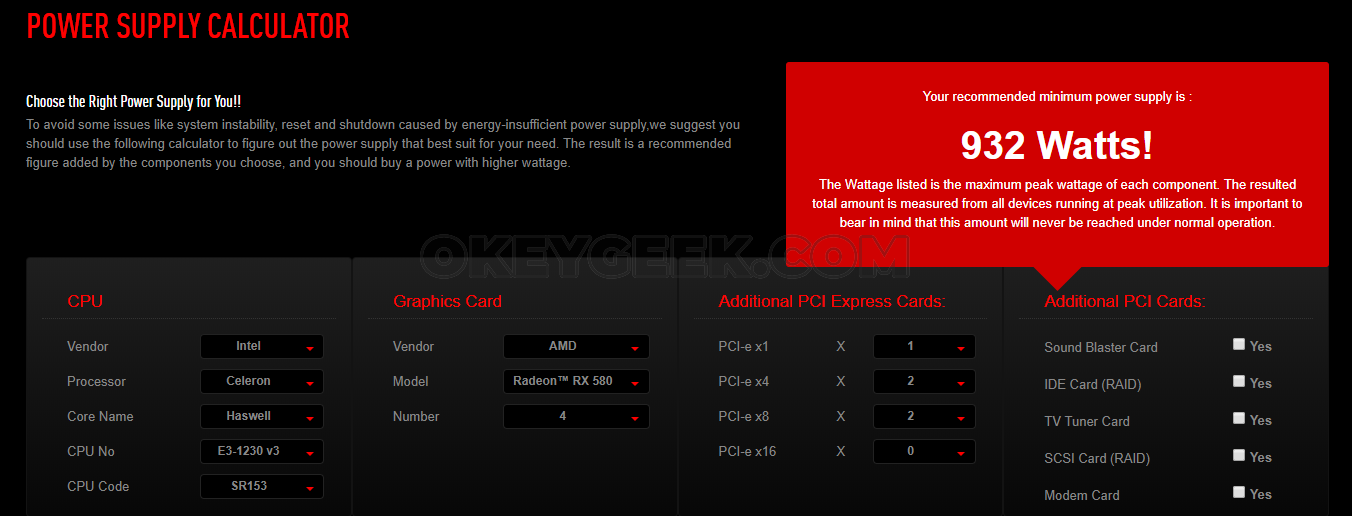
Both are valuable. GPU manufacturer recommendations provide a safe minimum for that specific card. However, an online PSU calculator (like PCPartPicker) factors in ALL your components – CPU, motherboard, RAM, storage, etc. – giving a more accurate total system wattage. Use the calculator for your full build, then ensure it meets or exceeds the GPU's minimum recommendation.
Myth vs Reality
Myth: All power supply cables are interchangeable.
Reality: Absolutely not! While some cables *appear* similar, PSU cables are proprietary to specific power supply models or series. Using incorrect cables can short-circuit components or cause severe damage, especially when mixing brands. Always use the cables that came with your specific power supply to ensure proper voltage delivery and safety.
Myth: Buying a cheap PSU is okay if it has high wattage.
Reality: A cheap PSU, regardless of advertised wattage, is a critical mistake. Budget PSUs often use low-quality components, leading to unstable power delivery, poor efficiency, and a higher risk of failure or component damage. They often lack crucial safety features. Always prioritize reputable brands with good reviews and 80 Plus ratings for reliability and system protection.
Still have questions?
Check out our in-depth guides on 'Building Your First Gaming PC,' 'Optimizing FPS for Competitive Play,' and 'Understanding GPU Architectures 2026' for more advanced insights and troubleshooting tips!
Hey there, tech enthusiasts! I get why this question trips up so many people: "How many watts do I really need for my gaming PC in 2026?" Choosing the right power supply unit, or PSU, isn't just about raw numbers. It’s about ensuring your components get consistent, stable power, protecting your investment, and even considering future upgrades. This is crucial for a smooth gaming experience.
A well-selected PSU prevents crashes and keeps your system running efficiently. Undersizing can lead to system instability, while oversizing wastes money and energy. Let’s break down everything you need to know about PSUs for your ultimate gaming rig. We'll explore current trends and future-proofing strategies together. Don't worry, you've got this!
Beginner / Core Concepts
1. **Q:** What exactly does a power supply unit (PSU) do in a gaming PC?**A:** Think of your PSU as the heart of your PC; it delivers life-blood, electricity, to every single component. It takes the AC power from your wall outlet and converts it into the DC power your motherboard, GPU, CPU, and storage devices need. It’s not just a converter; it’s a regulator, ensuring stable voltages so your expensive components don't get fried. Without a reliable PSU, even the best CPU or GPU won't perform optimally, leading to crashes or poor performance. I always tell my students, a good PSU is the silent hero of any great build, preventing headaches down the line. It's often overlooked, but it's fundamentally critical for system stability. You've got this!
2. **Q:** Why can't I just guess the wattage for my gaming PC?
**A:** Guessing your PSU wattage is like guessing how much fuel your car needs for a long trip; you might run out! An undersized PSU can cause system instability, random reboots, and even permanent damage to components during peak load. Conversely, an oversized PSU might cost more upfront and operate less efficiently if it's consistently underutilized, though modern PSUs are better at efficiency across load ranges. In 2026, with power-hungry GPUs and CPUs, precise calculation is more important than ever for optimal performance and longevity. Using a reputable online calculator provides a much safer estimate. This one used to trip me up too, but now I always double-check.
3. **Q:** What's the "80 Plus" certification, and why is it important for a gaming PSU?
**A:** The 80 Plus certification is a voluntary standard that guarantees a PSU is at least 80% energy efficient at 20%, 50%, and 100% of its rated load. This means only 20% or less of the power drawn from the wall is wasted as heat. Higher tiers like Bronze, Silver, Gold, Platinum, and Titanium indicate even greater efficiency. A Gold or Platinum rated PSU, for instance, will waste less energy, generate less heat, and save you a bit on your electricity bill over time. For a 2026 gaming rig, efficiency helps with system cooling and reduces noise, which is a major win for any serious gamer. It really helps keep things cool and quiet.
4. **Q:** Can an old PSU damage new gaming PC components?
**A:** Absolutely, an old or low-quality PSU can definitely harm your new components. Over time, capacitors in PSUs can degrade, leading to unstable voltage delivery, which is toxic for sensitive parts like CPUs and GPUs. Older PSUs also might not have the correct connectors for modern hardware, especially the newer PCIe 5.0 power connectors for high-end 2026 GPUs. Plus, they often lack crucial safety features found in newer models like over-power protection. Always invest in a new, reputable PSU for a new build. It's cheap insurance against costly component failures. Don't skimp on this part, it's really not worth the risk.
Intermediate / Practical & Production
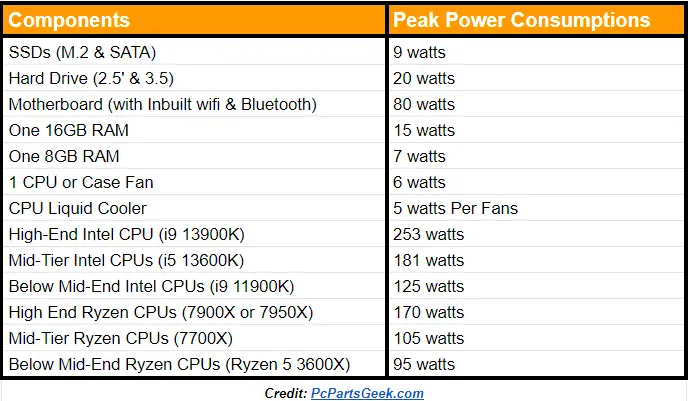
5. **Q:** How do I calculate the right PSU wattage for my specific gaming setup?**A:** Calculating wattage involves summing up the power draw of all your major components and adding a buffer. Start by listing your CPU (e.g., Intel Core i9-14900K, AMD Ryzen 9 8950X), GPU (e.g., NVIDIA RTX 5090, AMD Radeon RX 9900 XT), motherboard, RAM, and storage drives. Online PSU calculators from reputable brands like PCPartPicker or Cooler Master are invaluable tools for this. They factor in typical power consumption for various components. Once you have a base wattage, add a 10-20% buffer for peak loads and future upgrades. This ensures stability and flexibility, especially with demanding titles in 2026. Try this tomorrow and let me know how it goes!
6. **Q:** What's the difference between modular, semi-modular, and non-modular PSUs?
**A:** This refers to cable management flexibility, which is super important for a clean build and good airflow. Non-modular PSUs have all cables permanently attached, often leading to cable clutter. Semi-modular PSUs have essential cables (like the 24-pin motherboard and 8-pin CPU) fixed, but allow you to attach others as needed. Fully modular PSUs offer the most flexibility, with all cables detachable. This makes installation much cleaner and improves airflow inside your case. For gaming PCs in 2026, where aesthetics and cooling are key, a fully modular PSU is generally preferred, even if it costs a bit more. It's a quality-of-life upgrade for sure.
7. **Q:** Is a higher wattage PSU always better for future-proofing?
**A:** Not necessarily. While having some headroom for future upgrades is smart, excessively high wattage can be overkill and less efficient if your system rarely approaches that peak. Modern PSUs are most efficient at around 50-60% load. A 750W PSU for a system that only draws 300W might be less efficient than a 550W unit running at 55% load. Aim for about 1.5 times your estimated peak consumption, leaving room for a next-gen GPU. In 2026, GPU power demands are still significant, so a good 150-200W buffer is often a sweet spot for balance. It’s about smart planning, not just bigger numbers.
8. **Q:** How much wattage should I allocate for a high-end 2026 GPU like the RTX 5090?
**A:** High-end GPUs in 2026, like the rumored RTX 5090 or its AMD counterparts, are expected to be power beasts, often requiring 450W to 600W or even more just for the card itself. NVIDIA's and AMD's designs continue to push power limits for performance gains. It's crucial to check the manufacturer's recommended PSU wattage for your specific card. A system built around such a GPU typically demands a minimum of an 850W or even 1000W PSU to ensure stable operation. Always prioritize the GPU's recommended wattage and then add your CPU and other components. Don't forget those new 12V-2x6 or similar power connectors required.
9. **Q:** Are there any specific PSU brands I should trust for gaming in 2026?
**A:** Absolutely, brand reputation is paramount when it comes to PSUs. Brands like Seasonic, Corsair, be quiet!, EVGA, and Cooler Master consistently produce high-quality, reliable units. They offer excellent warranties and use premium components, which translates to better stability and longevity. Lesser-known or generic brands often cut corners, leading to unstable power delivery and potential system damage. Always check professional reviews and benchmarks before committing to a purchase. In 2026, these established names continue to lead the market in terms of innovation and reliability. Investing in a trusted brand provides peace of mind.
10. **Q:** What are power spikes, and how do they affect PSU selection for gaming?
**A:** Power spikes, or transient loads, are brief, sudden increases in power consumption that primarily occur when components like the GPU or CPU rapidly switch from a low-power state to a high-power state. Modern high-performance GPUs, especially during intense gaming moments, can exhibit significant power spikes that exceed their average TDP. Your PSU needs to handle these momentary surges without tripping its safety protections or causing system instability. This is why adding a wattage buffer (the 10-20% mentioned earlier) is so critical. Some newer PSUs are specifically designed with better transient response, a crucial factor for 2026 builds. You've got this!
Advanced / Research & Frontier 2026
11. **Q:** How do ATX 3.0 and PCIe 5.0 impact PSU requirements for upcoming 2026 hardware?**A:** ATX 3.0 is a game-changer for PSUs, specifically designed to handle the massive power spikes of modern GPUs (up to 3x the GPU's rated power for 100 microseconds). It introduces the new 12V-2x6 (formerly 12VHPWR) connector, which is a PCIe 5.0 standard. This single cable can deliver up to 600W, simplifying cable management and ensuring stable power delivery to next-gen GPUs expected in 2026. Older ATX 2.x PSUs might struggle with these transient loads, potentially leading to shutdowns or instability. For any new high-end 2026 build, an ATX 3.0 certified PSU is highly recommended for compatibility and stability. It's a foundational shift.
12. **Q:** What are the considerations for multi-GPU setups or power-intensive workstations in 2026?
**A:** Multi-GPU setups are less common for pure gaming in 2026 due to diminishing returns and driver complexities, but they still exist for certain professional applications or extreme enthusiasts. These configurations require significantly higher wattage, often 1200W or more, and a PSU with ample PCIe power connectors. Workstations with multiple GPUs, high-core-count CPUs, and extensive storage arrays will also demand robust power. Prioritize a high-efficiency Platinum or Titanium rated PSU to manage heat and energy costs. Always use a dedicated PSU calculator that supports multi-GPU configurations for accurate wattage estimation. Over-speccing here is often a necessity.
13. **Q:** How do power delivery systems on motherboards interact with PSU stability, especially with overclocking?
**A:** The motherboard's Voltage Regulator Module (VRM) quality is crucial, especially when paired with a powerful CPU and PSU, and particularly for overclocking. While the PSU delivers raw power, the VRM refines and delivers stable voltage to the CPU and RAM. A high-quality PSU ensures clean power input, but a weak VRM can still lead to instability even with a great PSU, especially during heavy loads or overclocking. In 2026, higher-end motherboards come with robust VRM designs, often with active cooling. It’s a symbiotic relationship: a good PSU feeds a good VRM, which then feeds your CPU optimally. Don't overlook either component.
14. **Q:** What emerging power efficiency standards or technologies should I look for in 2026 PSUs?
**A:** Beyond 80 Plus Titanium, some manufacturers are exploring even higher efficiency targets, though the gains become marginal. The biggest emerging trend for 2026 is the widespread adoption of ATX 3.0 and its emphasis on handling dynamic loads, which is a form of efficiency in power delivery stability. We're also seeing more intelligent fan control, sometimes with semi-passive modes at low loads for quieter operation. Some PSUs integrate with system monitoring software, providing real-time power consumption data. Look for reviews that specifically test transient response and ripple suppression, as these are becoming key differentiators for high-performance 2026 systems.
15. **Q:** Are there any environmental or sustainability factors to consider when choosing a PSU for my gaming PC in 2026?
**A:** Absolutely! Choosing a high-efficiency PSU (Gold, Platinum, or Titanium rated) directly reduces your electricity consumption and, consequently, your carbon footprint. Less wasted energy means less heat generated, which can also extend component life and reduce the need for aggressive cooling. Some manufacturers are also focusing on more sustainable materials and packaging. While it might be a small individual impact, collectively, it makes a difference. As consumers in 2026, we have the power to support companies committed to greener practices. It's a thoughtful approach to gaming.
Quick 2026 Human-Friendly Cheat-Sheet for This Topic
- **Use a PSU Calculator:** Always, always use an online PSU calculator (like PCPartPicker) to estimate your wattage. Don't guess!
- **Add a Buffer:** Aim for 10-20% more wattage than your calculated peak to handle spikes and future upgrades.
- **Prioritize GPU:** Your graphics card is the biggest power hog; check its recommended PSU wattage first.
- **Go ATX 3.0 for New Builds:** If you're building in 2026, an ATX 3.0 PSU ensures compatibility with next-gen GPUs and handles power spikes better.
- **Invest in 80 Plus Gold/Platinum:** Good efficiency saves money on electricity and reduces heat/noise.
- **Choose a Reputable Brand:** Seasonic, Corsair, EVGA, be quiet! are trusted names for reliability and warranty.
- **Modular is Better:** For easier cable management and better airflow, fully modular PSUs are a lifesaver.
Essential factors for PSU selection, accurate wattage calculation, understanding 80 Plus efficiency ratings, importance of ATX 3.0 standard, future-proofing for 2026 GPUs and CPUs, reliable PSU brands, cable management tips.
35


The Ultimate Guide To Choosing The Best Power Supply For Your Gaming PC . Best Power Supply 2025 Top PSUs For Your Gaming PC Gamers Unchained Best Power Supply Gaming Pc . These Are The 12 Best Gaming PC Power Supplies For Every Budget Beabaca4 30d2 4671 82a3 1979626436 . What Power Supply For Gaming Computer At Katie Butters Blog 71so7 BgkQS . PC Builder S Guide To Choosing The Right Power Supply For Your GPU And Screenshot 2024 03 28 At 12.07.57 Scaled

How Many Watts Do You Need For A Gaming PC GeekaWhat FI How Many Watts Do You Need For A Gaming PC 1024x576 . What Power Supply For Gaming Computer At Katie Butters Blog SL1500 . Recommended Power Supply For Gaming Pc At Carlos Pratt Blog 970 80 . Power Supply And GPU 2 Things To Check PCPartsGeek All Components Required Psu Watts . The Only Budget Gaming PC You Need For 2026 Thermaltake Toughpower Series Gx2
How To Install A PSU Into Your Gaming PC Psu . Best Power Supplies For Gaming PCs In 2025 Our Top PSUs Tested And Thermaltake Smart RGB 500W Turned On In PC . Best PC Power Supply Calculator Tools To Find Right PSU Wattage Psu Voltage Current Table . How To Choose The Perfect Power Supply For Your Gaming PC PC Gamer 1200 80 . Choose The Perfect Power Supply For Your Gaming PC Zexron Image 750x


How To Choose The Best Power Supply For A Gaming PC Power Supply For Gaming Pc . 10 Best Power Supplies For Gaming PC In 2024 Tier S Cooler MasterWatt Maker . TUTORIAL PC Power Supply Wattage Calculator Tutorial YouTube . Top 15 Best Power Supplies For Gamers In 2020 PureGaming 51oB1WBy29L . How To Choose The Perfect Power Supply For Your Gaming PC PC Gamer


How To Choose The Perfect Power Supply For Your Gaming PC PC Gamer 650 80 . How To Choose The Perfect Power Supply For Your Gaming PC PC Gamer 1200 80 . How To Calculate The Power Supply Unit PSU Wattage How Image 1263 . How Many Watts Does A Gaming PC Use Corsair Power Supply . News Guides HardwareDB Choose Gaming Pc Power Supply Wattage Thumb


Computer Power Supply Wattage Guide How Much Power Do You Really Need . How Many Watts Does A Gaming Laptop Use WePC How Many Watts Is My Gaming Laptop Power Adapter Power Brick . How Many Watts Does A Gaming PC Use Complete Guide How Many Watts Does A Gaming PC Use 768x502 . How Much Power Does A Gaming PC Use How Much Energy Does A Gaming PC Use 780x438 . How Much Power Does A Gaming PC Use Watts Cost Monthly A Rapidly Spinning Electricity Meter Connected To A Gaming PC Answering How Much Power Does A Gaming PC Use 1024x683 .webp

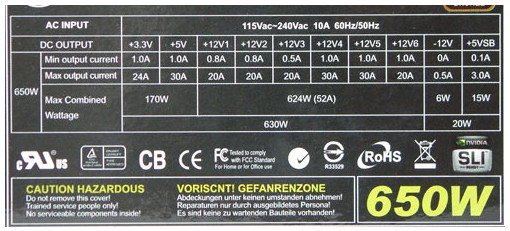
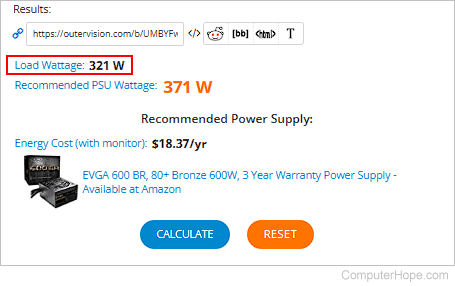

Our Best Gaming PC Under 2000 With Benchmarks Tech4Gamers Corsair Rm850x Shift Best 2000 Gaming Pc Build Power Supply . Choosing The Right Power Supply For Your Gaming Rig Modern Gamer P79025 Power Supply For Gaming PCs 19b34ed33d 788965286 . What Happens If Your Power Supply Is Too Weak Answered Calculate The Watts For Your Power Supply . How To Check A PC S Power Consumption Outervision Total System Draw . How Many Watts Does A Gaming PC Use Gaming PC Inside 1 768x576